
Artificial intelligence is rapidly lowering the technical barriers to making music.
A person no longer necessarily needs years of instrumental training, access to a professional studio, or even the ability to sing to turn an idea into a song. AI can generate instruments and vocals, isolate dialogue, assist with production, and increasingly participate in mixing and mastering.
But greater capability raises a different question: if technology can make music technically convincing, can it also reproduce what makes music emotionally meaningful?
For musician, audio engineer, and sound designer Taylor Mulye, the answer lies partly in something technology is often designed to remove: imperfection.
A slight crack in a voice, a note that lands just outside perfection, or the strain of a singer pushing through an emotional lyric may technically be flaws. Yet those moments can also carry the experience, vulnerability, and individuality of the person performing.
In this DATAAD Industry Voices interview, Mulye discusses AI-generated music, audio engineering, accessibility, copyright, transparency, and why human judgment may become more important—not less—as AI tools become more capable.
About Taylor Mulye
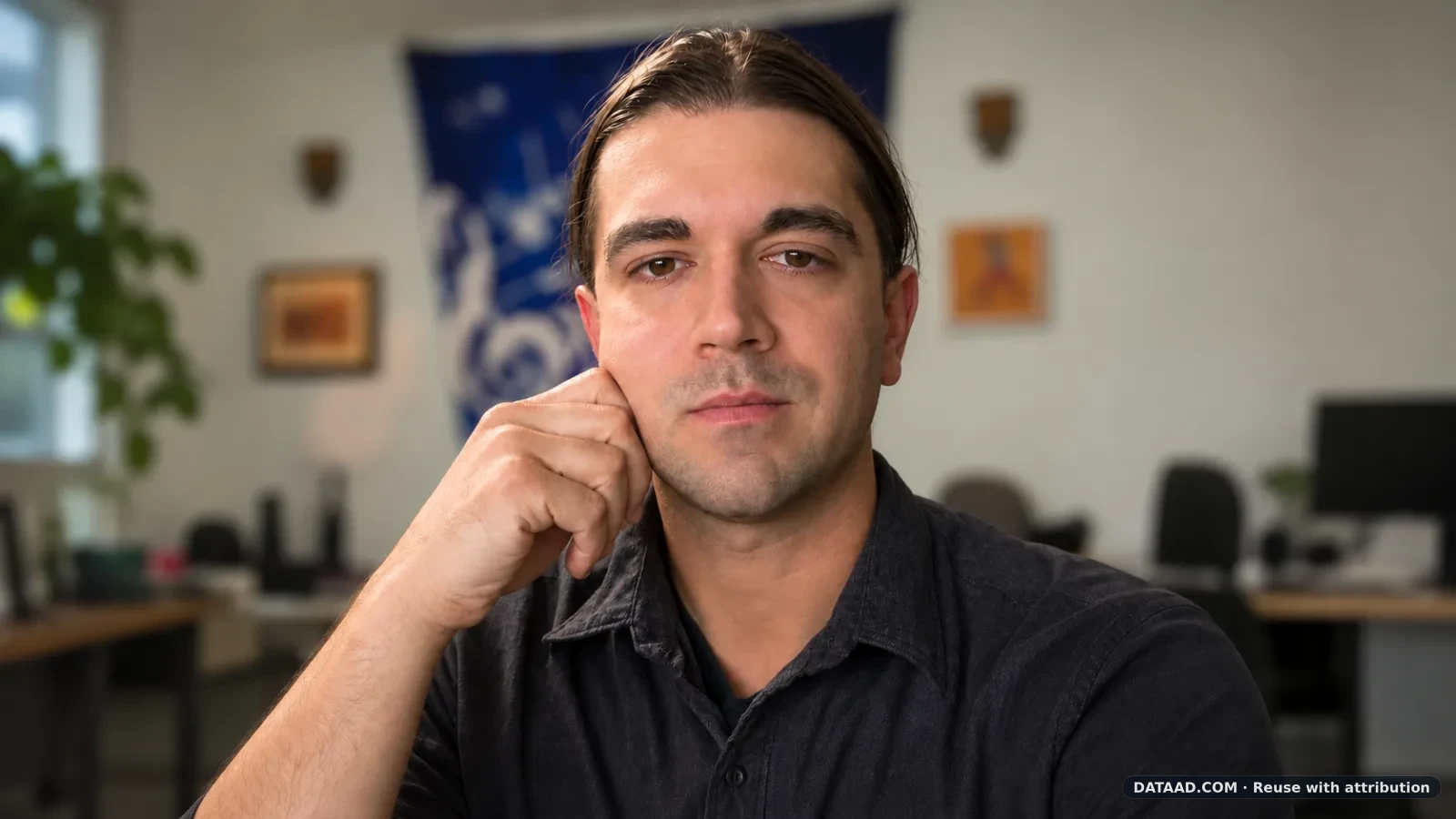
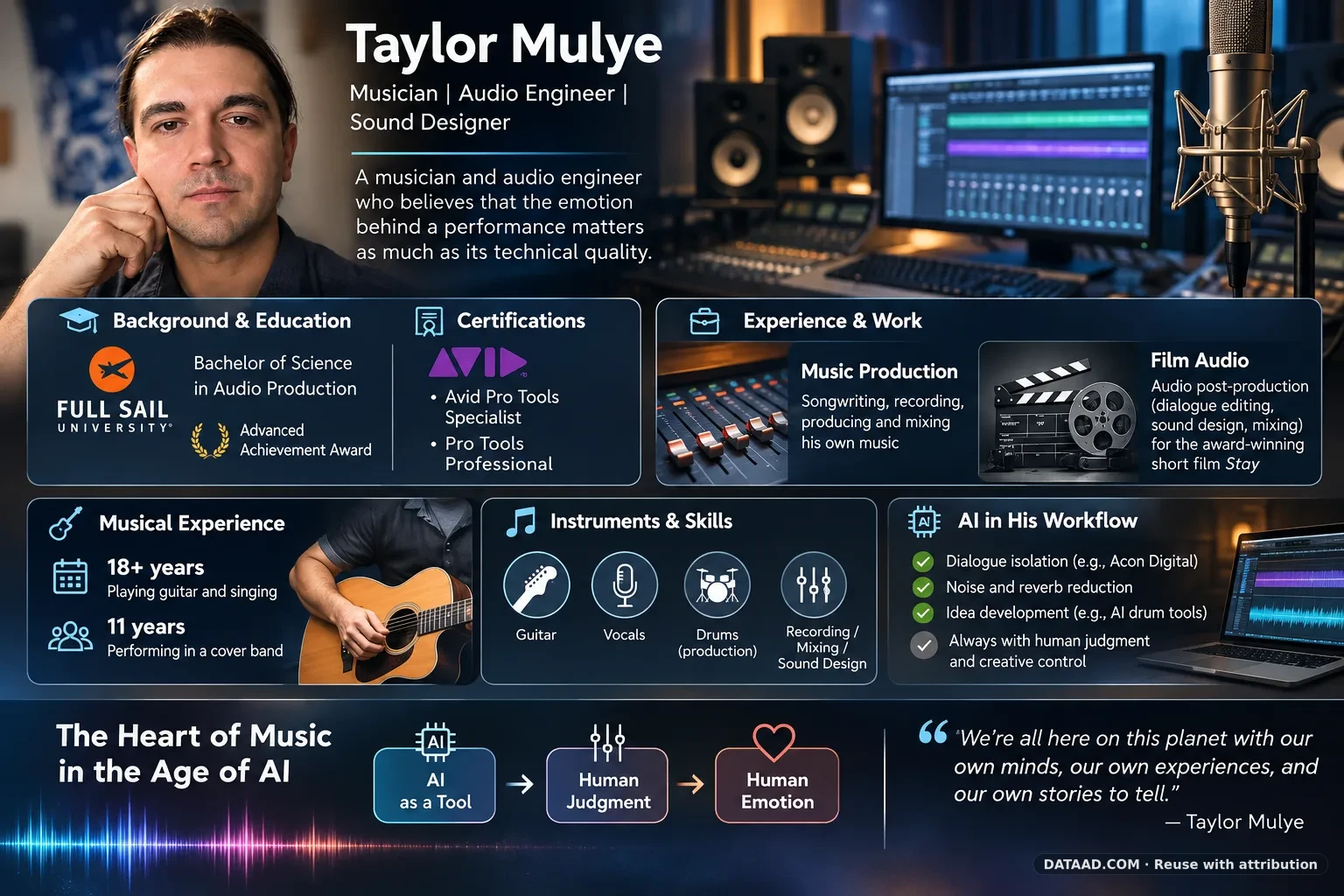
Taylor Mulye is a musician, audio engineer, and sound designer from Michigan's Upper Peninsula in the United States. He has been playing guitar and singing for more than 18 years, including around 11 years performing in a cover band.
His interest in creating and recording music eventually led him to study audio production. Mulye recently graduated from Full Sail University with a Bachelor of Science in Audio Production, where he received the Advanced Achievement Award. He also holds Avid Pro Tools Specialist and Pro Tools Professional certifications.
Along with writing, recording, and producing his own music, he has worked in audio post-production for independent film, including dialogue editing, sound design, and mixing for the award-winning short film Stay.
Whether working with music or film, Mulye believes that the emotion behind a performance matters just as much as its technical quality.
Q1. The Human Element
DATAAD: You mentioned that imperfections can make a musical performance feel real. From your experience as an audio engineer, can you share an example where preserving an imperfection made a recording more emotionally powerful?
Taylor Mulye: I think one thing we all know is that, as humans, we are imperfect. Art itself is full of imperfections. A painter might make a small mistake that ends up giving a painting its character, just as a musician might have an imperfect moment during a recording session that makes the performance even more emotional.
One example is recording vocals. Take Auto-Tune. It can be a great tool when used correctly, and sometimes it really does improve a recording. However, I also believe it can take something away from a person's voice when everything becomes too perfect.
When I first started recording my own vocals, I thought I always needed that perfect take. Every note had to be right and every part needed to sound exactly how I imagined it.
Over time, I've realized that sometimes those little imperfections are what make a performance special.
Your voice might crack, or a note might be slightly flat. Sometimes that means you need another take, but not always.
When you're really putting your emotions into the lyrics, you might hear a little strain in your voice or even a crack as you're pushing through a particularly emotional part of the song. To me, that's where the emotion really lives.
When you preserve those moments, you're allowing the listener to hear what you were feeling when you recorded the song.
They might not have experienced the exact same situation you were singing about, but that raw emotion can bring out feelings of their own. It might remind them of something they've experienced, bring back a nostalgic memory, or simply make them feel something they weren't expecting.
I believe that's one of the most powerful things about music. You don't have to experience the exact same emotions as the artist to connect with what they're expressing.
Sometimes an imperfect performance can communicate something that a technically perfect recording simply cannot.
Q2. Hearing the Difference
DATAAD: When comparing AI-generated music with human performances, what technical or emotional differences do you notice most often? Are there particular sounds or musical elements where AI still struggles?
Taylor Mulye: I really believe AI is a great way for people to be creative, even in music, without necessarily having the ability to play an instrument or sing.
However, as people often say about music, I just don't feel the soul in AI-generated songs.
You can give AI lyrics and a general idea of what you want, but with where the technology stands right now, it's still relying on algorithms and patterns learned from existing information to generate something.
When I write a song, I put my heart and soul into it. You can absolutely put that same emotion into lyrics and give them to an AI system, but when you remove the human performance and all those little inconsistencies that come with it, I believe you're taking something away from the soul of the music.
From an audio engineering perspective, I also notice technical differences. Sometimes an instrument feels like it should be louder, another element overpowers the mix, or you can hear artifacts in the generated audio—small pops, strange sounds, or little nuances that become distracting once you notice them.
But I think the biggest thing AI struggles to recreate is the emotion behind a human voice.
When I listen to AI-generated music, the vocals often have this generic quality or an unnatural tone that just doesn't sound quite right to me.
There's something about the way a real person delivers a lyric—whether it's a slight crack in their voice, a change in intensity, or the way they emphasize certain words—that makes the performance feel alive.
I know some people genuinely enjoy AI-generated music, and I can understand why. Sometimes the instruments actually sound pretty good.
But for me, once I hear an AI-generated voice, I often lose that emotional connection to the song.
When I listen to music, I'm looking for something that makes me feel something. Whether it's pain, sorrow, or happiness, I want to hear those emotions coming through someone's voice.
That's the part of music I personally don't think AI has been able to truly capture.
Q3. AI in the Studio
DATAAD: Have you incorporated any AI-based tools into your audio engineering, mixing, or music production workflow? Where do they genuinely help, and where do you prefer human judgment?
Taylor Mulye: Personally, I haven't relied heavily on AI in my audio engineering work, but I've definitely experimented with it and found some really helpful tools along the way.
For example, I also work in film audio, and I recently discovered an AI-based dialogue isolation plugin called Acon Digital Extract:Dialogue 2.
It works phenomenally well at cleaning up dialogue while preserving the original voice. It can remove background noise and even reduce unwanted reverb without completely destroying the natural sound of the recording.
Of course, it still has its flaws and can sometimes remove certain frequencies or affect the quality of the voice, but when used correctly, it can work wonders.
I'm also not much of a drummer, so I've experimented with AI-assisted drum tools that can adapt to your playing. I think these are great for helping develop ideas when a song is coming together or when you need a little inspiration.
However, I personally haven't found one that sounds authentic enough for me to want to use it in a commercially released song.
I think AI has a lot of potential to help in different areas of audio production. I just don't believe we should rely entirely on these tools to do the work for us.
You still need the experience, knowledge, and ears of a human being to make sure the results are actually accomplishing what you intended.
Going back to the dialogue isolation plugin, it works amazingly well, but I never assume the audio is perfect just because I've processed it.
I still listen carefully, check for anything that might have been removed or altered, and make adjustments where they're needed.
To me, that's where AI really shines in audio production. It can be an incredible tool for helping us accomplish things more efficiently, but it shouldn't replace the human judgment and creativity behind the work.
Q4. The Future of Audio Engineers
DATAAD: As AI becomes capable of generating, mixing, and mastering music, how do you think the role of professional audio engineers and sound designers will evolve?
Taylor Mulye: I absolutely love working with audio and music. It's the one thing in this world that I could genuinely see myself doing for the rest of my life.
But I won't lie—the rapid development of AI has made me nervous about what the future might hold for audio engineers and sound designers.
I don't believe AI will ever be completely perfect at editing, mixing, or mastering audio, just as humans aren't perfect either. However, I do believe there's something important about the judgment, experience, and creativity that an audio engineer brings to a project.
At the same time, the speed and accessibility of AI tools are definitely something that concerns me when I think about the future of this profession.
A lot of people want quick results, and I can understand why someone might choose an AI tool that can mix or master their music in minutes rather than spending the time and money working with an engineer.
For some people, that might be exactly what they need, and I don't think there's anything wrong with that.
However, I believe there's still a difference between getting a technically acceptable result and working with someone who genuinely understands what you're trying to express through your music.
An audio engineer isn't just there to adjust frequencies or make something louder. They're listening to the performance, understanding the artist's intentions, and making decisions that help bring those emotions to the listener.
I actually think AI could become an incredible resource for audio engineers, allowing us to spend less time on repetitive tasks and more time focusing on the creative side of our work.
But I also hope that as these tools become more common, people will continue to recognize the value of having a real person involved in that creative process.
Do I think AI could pose a threat to certain aspects of audio engineering? Absolutely.
But I also believe there's an opportunity for us to adapt and incorporate these tools into our work without losing what makes audio production such a human experience.
Ultimately, I hope the future isn't about AI replacing audio engineers, but about finding a balance where technology can help us accomplish more while still allowing human creativity, emotion, and experience to remain at the center of the music we create.
Q5. Democratization vs. Creativity
DATAAD: AI enables people without musical training or expensive equipment to create music. Do you see this primarily as an opportunity to expand creativity, or could it undermine the value of professional musicians and producers?
Taylor Mulye: AI is growing rapidly, and I think one of its greatest opportunities is making music creation more accessible.
Not everyone has the equipment, training, or ability to play an instrument, sing, or produce their own music. Someone might have an amazing idea for a song but no way to bring it to life.
If AI gives that person an opportunity to express themselves creatively, I think that's a wonderful thing.
With the rise of AI tools, we're seeing more and more music being generated without traditional musicians or producers. And while some of it can sound pretty convincing, I often feel like something is missing when I hear an AI-generated voice or instrument.
It might sound technically impressive, but I don't always feel that same emotional connection.
Where I become concerned is how this accessibility could affect professional musicians, producers, and audio engineers.
I do believe AI is already changing the opportunities available in our industry, and the possibility of people losing work because of it is something I find both sad and honestly a little scary.
However, I don't believe making music more accessible has to mean replacing the people who have dedicated their lives to creating it.
There's still something special about working with a musician or producer who can listen to your ideas, understand what you're trying to express, and bring their own experiences and creativity into the process.
I think AI can help people get closer to bringing their ideas to life, and I absolutely support that.
I just hope that as technology continues to grow, we don't lose sight of the value of human creativity and the people who put their hearts and souls into their work.
Q6. Ownership and Authenticity
DATAAD: With AI-generated voices, instruments, and compositions becoming increasingly realistic, how important will transparency, copyright, and the identification of human-created music become?
Taylor Mulye: I really believe that AI-generated content should be labeled, especially with how convincing the technology has become.
Just look at AI-generated videos. Some of them have gotten so realistic that they can easily fool people. Not everyone is going to pay close attention to everything they see or hear, so it's completely possible for someone to listen to a song without realizing it was created using AI.
When musicians record and release music, the people involved in creating that recording are typically credited for their work.
I think something similar should apply when AI is used to generate music. If a song was created entirely or partially using AI, I believe listeners should have a way of knowing that.
Copyright is another area that concerns me. I haven't extensively researched the legal side of AI-generated music, but I can definitely see potential problems.
For example, what happens if two people use the same AI music platform and end up generating songs that sound extremely similar?
I could imagine situations where people accuse each other of copying their work, even though neither person intentionally copied the other.
Transparency could help prevent some of these issues. People deserve to know how the music they're listening to was created, and the individuals who contributed to it should receive proper credit.
Another concern is how AI systems learn from existing music. If a system has been trained on someone else's work, could it potentially generate something that sounds too similar to an existing song?
And what happens if someone releases that music commercially without realizing the similarities?
These are important questions because copyright disputes can have serious financial consequences, especially for independent musicians and producers.
As AI continues to develop, I hope we find ways to protect the people who create music while still allowing others to explore the creative possibilities these tools offer.
To me, transparency isn't about discouraging people from using AI. It's about making sure everyone understands what they're listening to, how it was created, and that the people behind the original work are treated fairly.
Q7. Looking Toward 2030
DATAAD: Imagine the music industry five years from now. What do you hope AI will help musicians achieve, and what aspects of human creativity should never be lost?
Taylor Mulye: I think the future looks both hopeful and a little scary for musicians and audio engineers. With how quickly AI is advancing, it's hard to know exactly what the music industry will look like in five years.
You can gather all the information in the world, but I don't believe that means you can recreate every thought or feeling that comes into someone's mind after experiencing something like a breakup, the loss of a loved one, a marriage, or any other major event in their life.
Those experiences shape who we are, and they influence the music and art we create in ways that are deeply personal.
I really hope AI continues to help people express themselves creatively, especially those who might have an idea or emotion they want to share but don't have the ability or resources to bring it to life on their own.
I also hope it becomes something that helps audio engineers and musicians rather than replacing the people who have dedicated their lives to this work.
One thing that concerns me is the possibility of losing those little imperfections that make music special.
That small nuance in someone's voice or performance might be the very thing that turns a song into an emotional experience for the listener.
But if we're relying entirely on AI to make everything sound perfect, those moments could easily be cleaned up or lost because a system decided they weren't technically correct.
However, I think if we approach these changes with an open mind and continue to value human creativity, we can find ways to use this technology to our advantage.
We can let it help us create, experiment, and bring our ideas to life without losing the emotion and individuality that make music so powerful.
“We're all here on this planet with our own minds, our own experiences, and our own stories to tell. And no matter how advanced technology becomes, I believe nothing will ever replace you and what your mind can build.”
— Taylor Mulye
DATAAD View: Perfection Is Not the Same as Meaning
The debate surrounding AI-generated music is often framed around capability: Can AI compose a convincing song? Can it generate realistic vocals? Can it mix or master audio at professional quality?
Mulye's perspective suggests another test may matter more.
Can technology understand why a technically imperfect moment should sometimes be preserved?
A cracked voice can be noise from an engineering perspective and emotion from a human one. The difference depends on context, intention, memory, and judgment.
This distinction may extend far beyond music.
As AI becomes capable of producing technically polished text, images, video, music, and other creative work, human creativity may increasingly be defined not by the ability to produce perfection, but by knowing when perfection is not the goal.
AI may help more people create. It may remove repetitive work and expand access to sophisticated production tools.
But the deeper question remains whether greater creative capability will also preserve the individuality, lived experience, and emotional imperfections that allow one human being to connect with another.