TOPIC

AI Data Center

AI servers, GPU platforms, racks, power and data-center infrastructure.

Open by Design – community-driven innovation shaping AI infrastructure
Insight

Open by Design: How Community-Driven Innovation Is Shaping AI Infrastructure

As AI racks push beyond 100 kW and infrastructure requirements evolve at unprecedented speed, interoperability is becoming a strategic necessity. Michael Schill of the Open Compute Project Foundation explains how community-driven open designs are reshaping power, cooling, networking and AI cluster deployment — and why Korea and the broader APAC ecosystem are positioned to play a larger role in defining the next generation of AI infrastructure.

Oct 6, 2026 · 5 min read
800 VDC AI data center power architecture showing rack-level, mid-rack and near-load DC-DC conversion
Opinion

800 VDC for AI Data Center Power Architectures: Moving Power Conversion Closer to the GPU

As AI racks approach megawatt-scale power, efficient distribution from the facility to the GPU becomes critical. 800 VDC reduces current, conductor size and power losses, but where should voltage conversion occur? This article compares rack-level, mid-rack and near-load conversion, examining efficiency, complexity and why future AI architectures may move high-ratio DC-DC conversion closer to compute.

Oct 5, 2026 · 6 min read
2026 OCP Global Summit logo – Open Compute Project
News

2026 OCP Global Summit Opens Oct. 12 in San Jose: "Scaling Innovation for the AI Era"

The Open Compute Project's flagship event returns to San Jose, California, October 12–15, 2026, now expanded to four days, bringing the global open hardware community together around AI-era data center infrastructure. <a href="https://www.opencompute.org/summit/global-summit" target="_blank" rel="noopener noreferrer">Event details and registration</a>
Oct 2, 2026 · 2 min read
AI data center infrastructure integrating power, cooling and high-density computing in Asia
Opinion

Can AI Infrastructure Scale Fast Enough?

An Asian industry perspective on the infrastructure challenge behind AI expansion. Oliver Lien examines how power availability, rising rack density, liquid cooling, optical connectivity and regional supply-chain collaboration will shape the next phase of AI data center deployment across Taiwan, Korea and Southeast Asia.

Oct 2, 2026 · 7 min read
Supermicro DCBBS infrastructure blueprint for NVIDIA Vera Rubin NVL72 AI factories
News

Supermicro Unveils 5MW-to-1GW DCBBS Blueprint for NVIDIA Vera Rubin NVL72 AI Factories

Supermicro has introduced its Data Center Building Block Solutions (DCBBS) Blueprints for NVIDIA Vera Rubin NVL72 and NVIDIA HGX Rubin NVL8, designed to scale AI factories from 5MW to 1GW. Built around repeatable 1,152-GPU scalable units, the architecture integrates compute, networking, storage, power infrastructure and DLC-2 direct liquid cooling into an end-to-end deployment model.

Sep 25, 2026 · 7 min read
Critical-facility engineer working inside a modern data center with cooling lines, UPS systems and safety infrastructure
Field Note

Inside Data Center Safety: Why the Most Important Rule Is Not to Rush

What makes data center safety different from conventional field service? A critical-facility engineer explains why redundancy is about more than uptime, why stored energy deserves special attention, and why rushing a repair can be more dangerous than the failure itself.

Sep 24, 2026 · 5 min read
The 111th Busan Future Economy Forum discussing sovereign AI, AI infrastructure and Busan’s maritime industrial transformation
Field Note

Why Busan? Korea’s Maritime Capital Looks to AI Infrastructure for Its Next Industrial Transformation

Busan is positioning artificial intelligence not as a standalone digital industry, but as a new layer of infrastructure for its traditional strengths in shipping, ports, logistics and manufacturing. At the 111th Busan Future Economy Forum on September 22, the discussion around sovereign AI, national computing capacity and industrial transformation pointed to a broader question: could Korea’s largest port city become an important regional base for industrial AI — and eventually for the data-center infrastructure that supports it?

Sep 23, 2026 · 4 min read
AI data center connected to the power grid, illustrating flexible computing and energy management
News

AI Data Centers Are Becoming Part of the Grid, Not Just Consumers of It

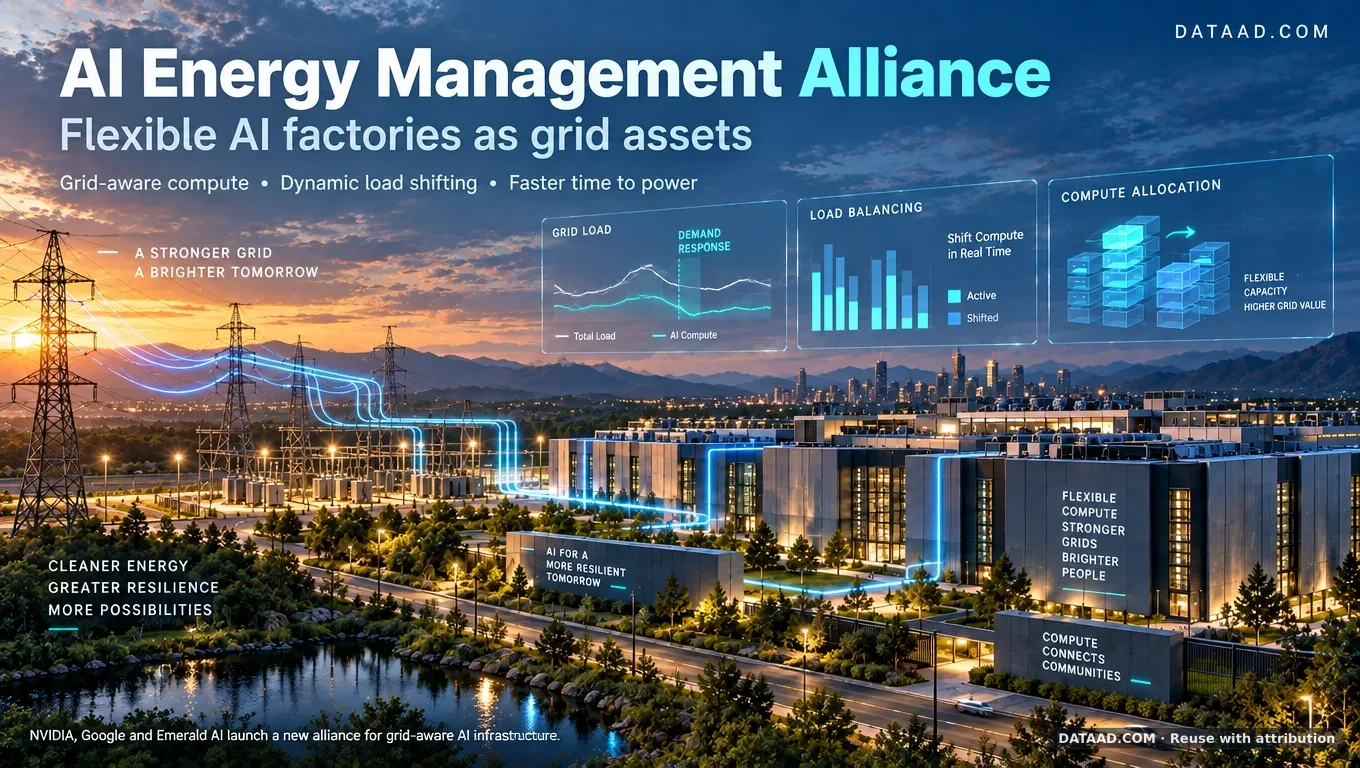
The AI Energy Management Alliance, launched by Emerald AI, Google and NVIDIA, aims to make AI data centers flexible participants in the power grid rather than fixed electricity consumers. By shifting non-critical computing workloads according to grid conditions, future AI factories could reduce peak demand, improve grid reliability and accelerate access to power. The initiative reflects a broader shift in AI infrastructure, where compute scheduling, cooling, energy storage and grid management increasingly operate as one integrated system.

Sep 20, 2026 · 6 min read
Korea’s AIDC Advantage Is Density, Not Scale: Why HBM, NPUs and Physical AI Matter
Field Note

Korea’s AIDC Advantage Is Density, Not Scale: Why HBM, NPUs and Physical AI Matter

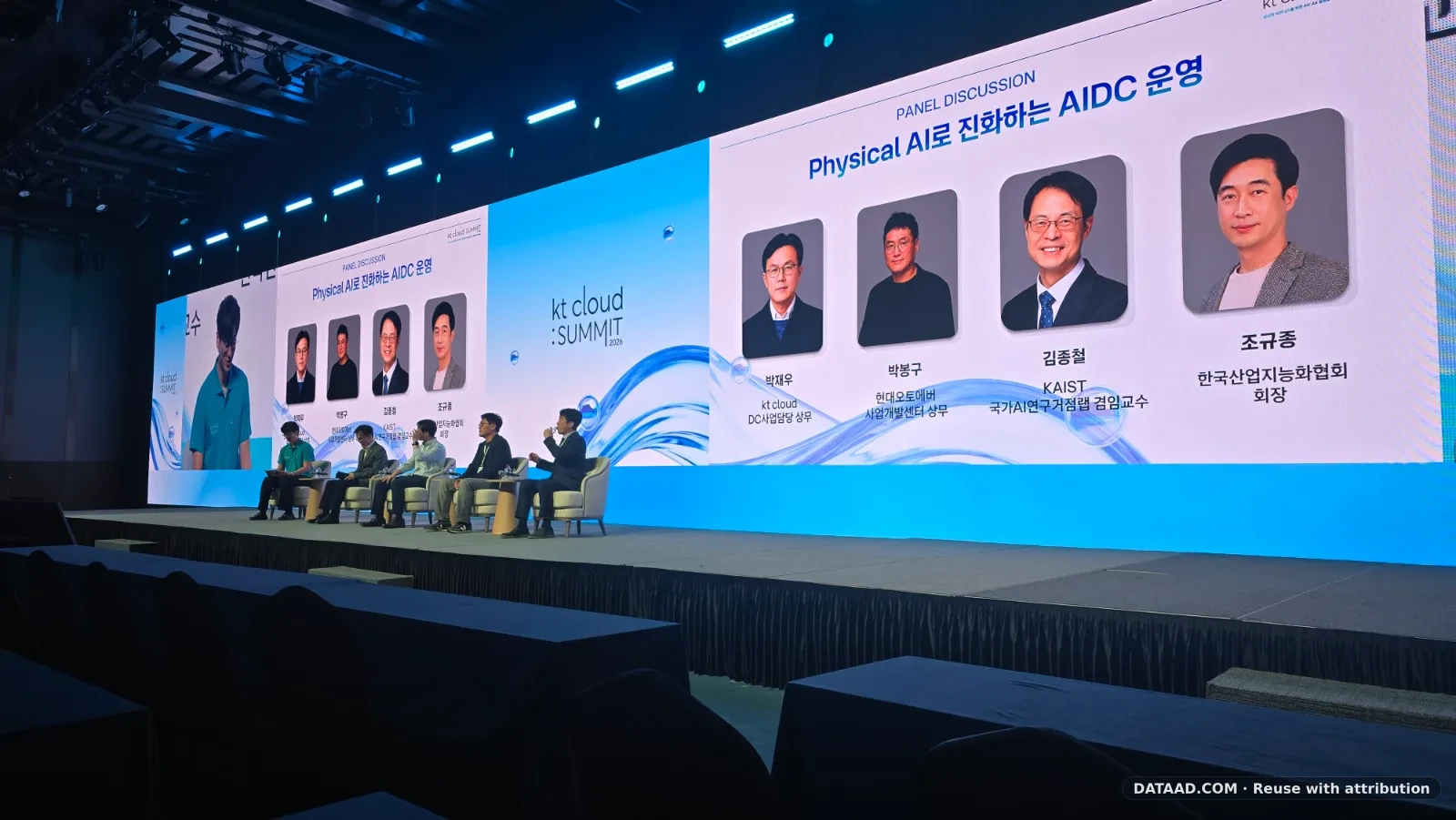
At KT Cloud Summit 2026, Korea’s AI infrastructure strategy appeared increasingly different from the hyperscale models emerging in the United States, China and Southeast Asia. Korea may not win a global AIDC race based on land, electricity or capital alone. Its stronger opportunity is the dense integration of HBM memory, domestic AI accelerators, telecom networks, advanced manufacturing, robotics and liquid-cooled AI infrastructure — turning the country itself into a potential testbed for Physical AI.

Sep 16, 2026 · 10 min read
From Cloud to Power and Cooling: What KT Cloud Summit 2026 Says About Korea’s AI Infrastructure Race
Field Note

From Cloud to Power and Cooling: What KT Cloud Summit 2026 Says About Korea’s AI Infrastructure Race

At KT Cloud Summit 2026 in Seoul, the morning keynote suggested that the next phase of cloud competition will no longer be defined by cloud software alone. AI infrastructure is becoming a tightly integrated system combining compute, cloud platforms, networks, data centers, power and cooling. The exhibition floor reinforced that message, with domestic AI accelerators and rack-level liquid-cooling infrastructure appearing alongside the cloud platform story.

Sep 15, 2026 · 5 min read
Quantum Computing Enters the AI Race: How the U.S., Japan and Korea Are Building the Next Computing Infrastructure
Analysis

Quantum Computing Enters the AI Race: How the U.S., Japan and Korea Are Building the Next Computing Infrastructure

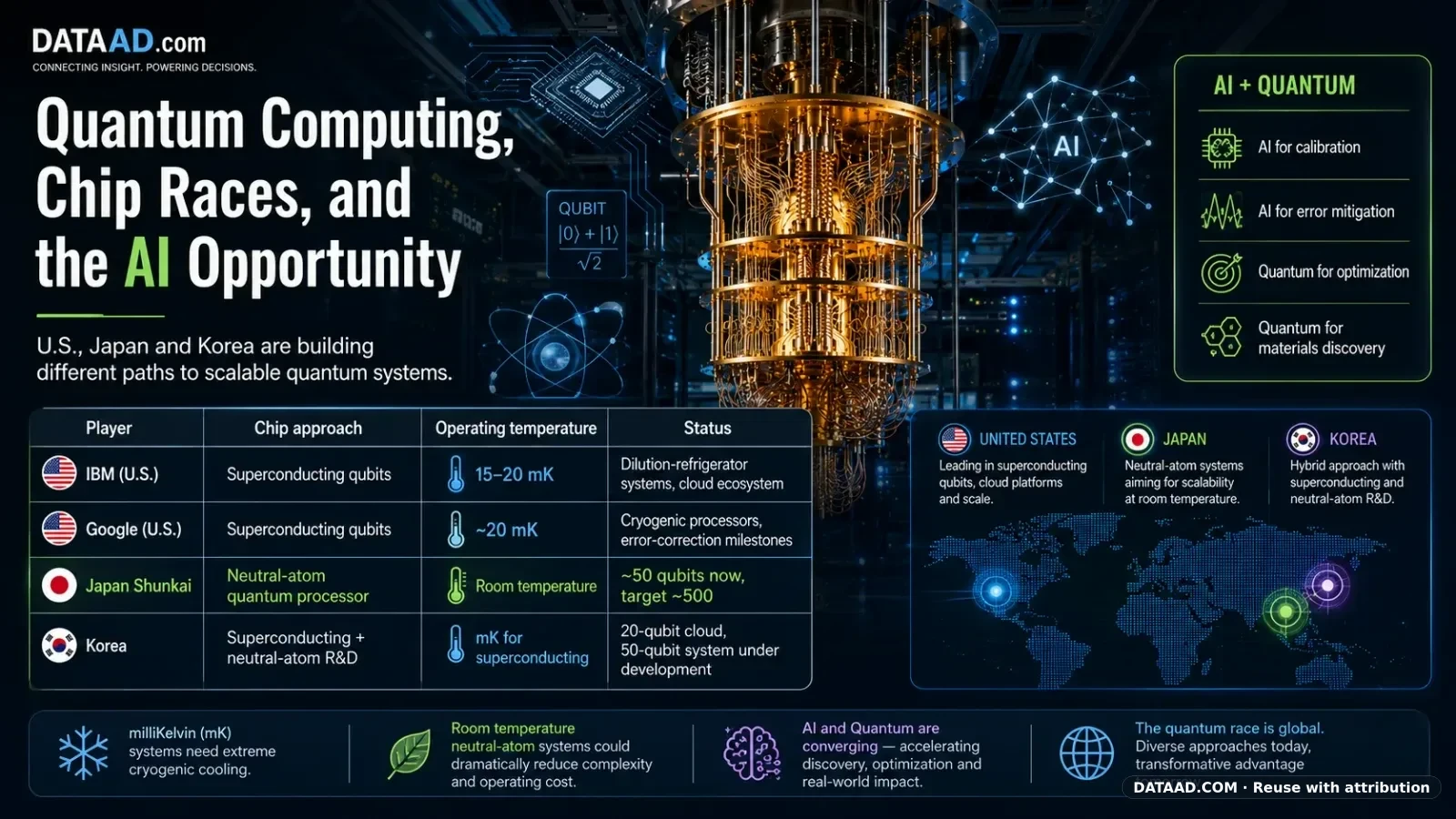
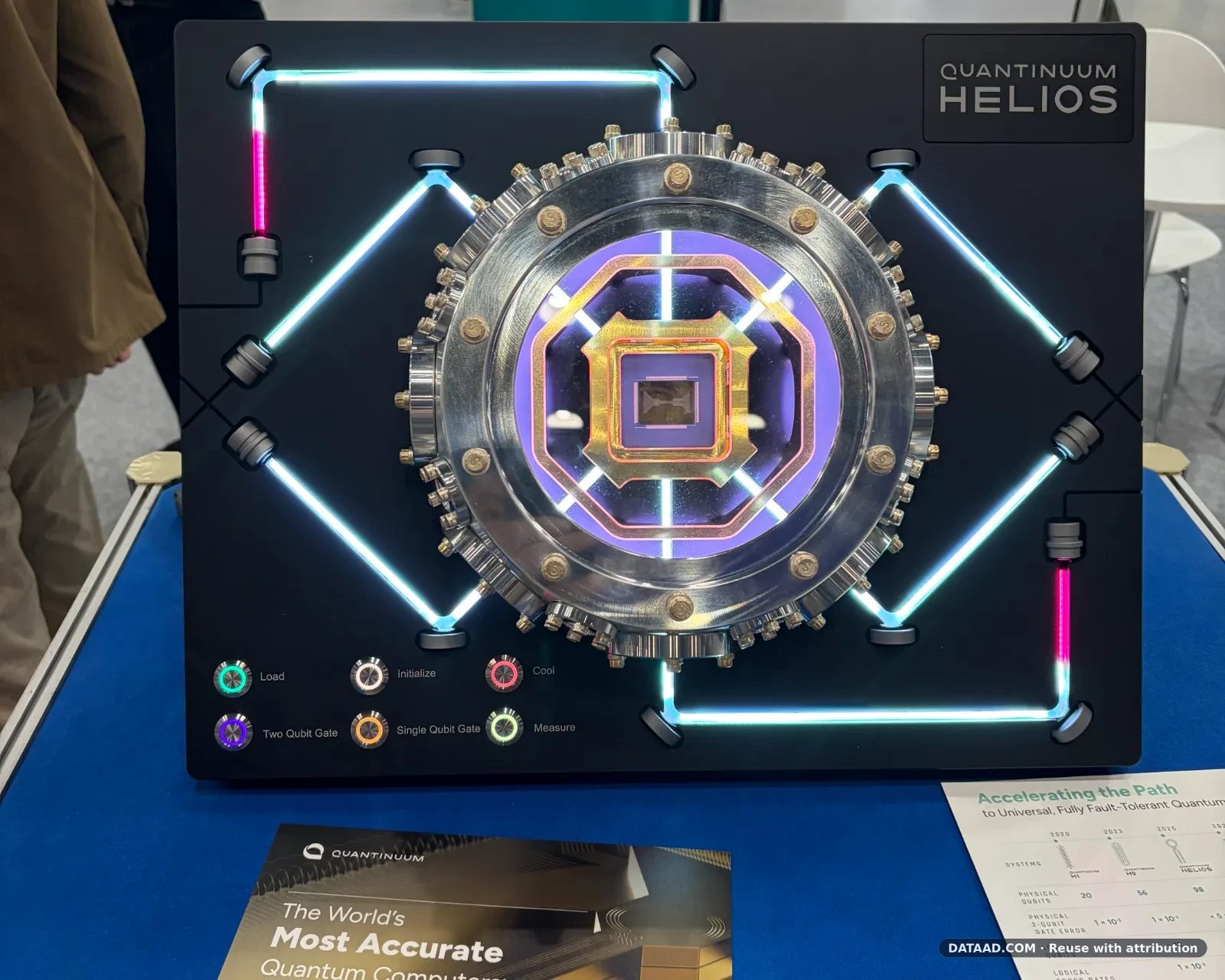
Quantum computing is moving from physics laboratories toward real computing infrastructure. IBM and Google are advancing superconducting quantum chips operating only millikelvins above absolute zero, while Japan has launched Shunkai, a neutral-atom system that does not require a dilution refrigerator. Korea is simultaneously developing superconducting and neutral-atom technologies. DATAAD examines the global quantum-chip race, the radically different cooling architectures, and why the ultimate winner may not replace AI GPUs—but work beside them.

Sep 11, 2026 · 9 min read
Portrait of Dr. Gleb Tsipursky, behavioral scientist and CEO of Disaster Avoidance Experts
Opinion

AI Infrastructure Needs a Human Recovery Budget Before Scale

As AI data centers become more automated and interconnected, resilience cannot depend on machines alone. Dr. Gleb Tsipursky argues that operators need a “human recovery budget” — clear exception ownership, usable evidence, intervention authority, and recurring practice — to preserve the ability to recover when automated systems reach their limits.

Sep 8, 2026 · 6 min read
From Copper to Light: AI Data Centers Are Pushing Fiber Deeper Into the Server
Field Note

From Copper to Light: AI Data Centers Are Pushing Fiber Deeper Into the Server

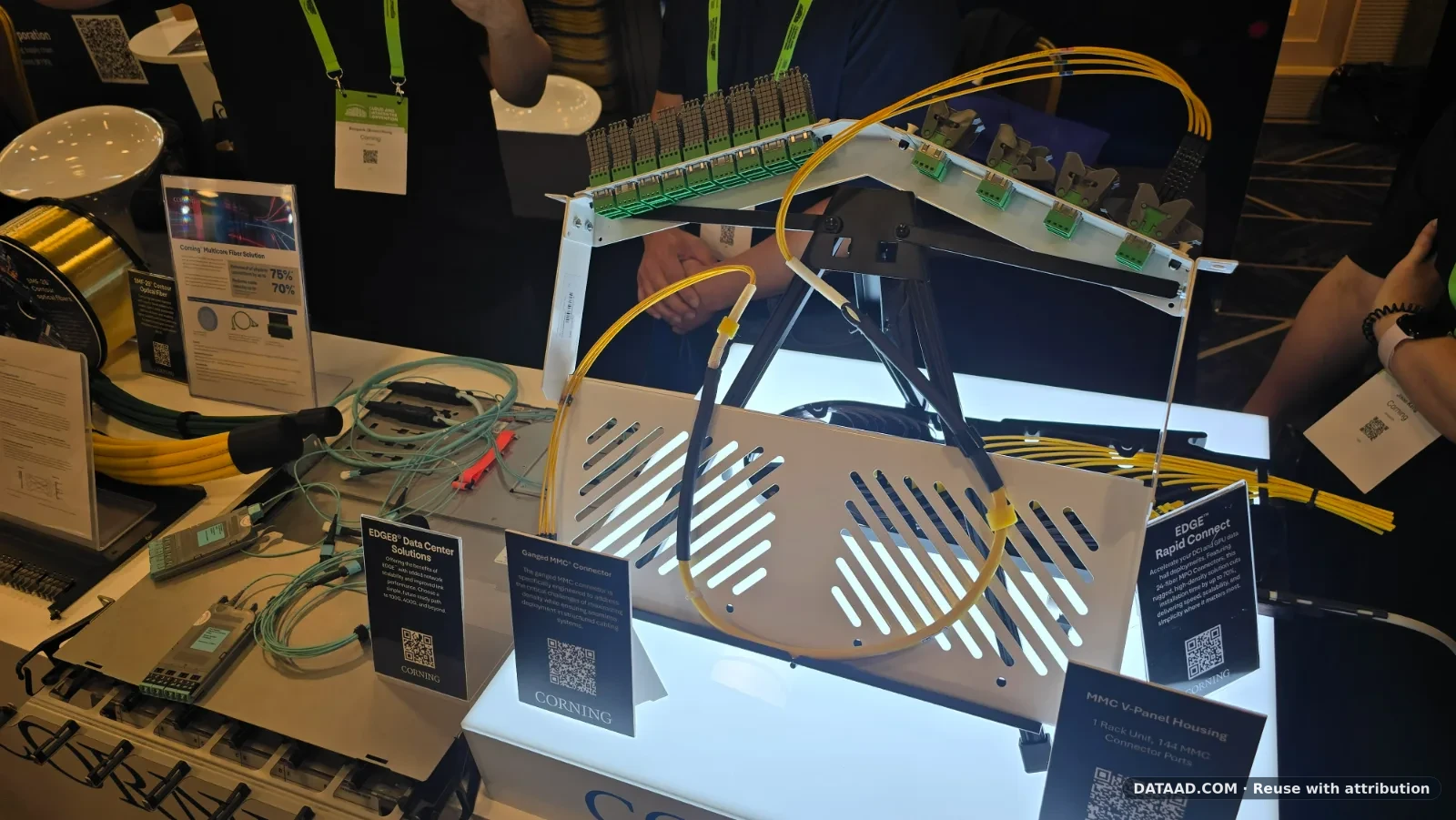
AI computing is changing not only GPUs and cooling systems but also the physical path through which data moves. Copper remains important for very short electrical connections, but higher bandwidth density and power constraints are pushing optical fiber deeper into AI racks, switches and eventually toward the chip itself. At KRCDC 2026 in Seoul, Corning’s high-density fiber and connector technologies offered a visible example of this transition.

Sep 3, 2026 · 5 min read
Korea’s AI Chip Bet: Rebellions, FuriosaAI and the Korea–Japan Data Advantage
Opinion

Korea’s AI Chip Bet: Rebellions, FuriosaAI and the Korea–Japan Data Advantage

As AI moves from model training toward massive-scale inference and agentic AI, Korea may have a larger opportunity than many expect. Rebellions and FuriosaAI are emerging as serious inference-chip challengers, while NAVER and the LINE–Yahoo ecosystem provide something equally important: real-world data, distribution and access to hundreds of millions of Asian users.

Aug 23, 2026 · 6 min read
From A100 to Rubin and Beyond: NVIDIA’s GPU Roadmap Is Rewriting AI Power and Cooling Infrastructure
Field Note

From A100 to Rubin and Beyond: NVIDIA’s GPU Roadmap Is Rewriting AI Power and Cooling Infrastructure

NVIDIA’s AI GPU roadmap is no longer just a semiconductor story. From the 400W-class A100 to 700W Hopper GPUs, 14.3 kW DGX B200 systems and roughly 120 kW GB200 NVL72 racks, each generation is pushing more power and heat into a smaller physical footprint. As Blackwell Ultra, Vera Rubin, Rubin CPX and eventually Feynman extend this trajectory, power-supply modules, liquid cooling, rack manifolds and electrical distribution are becoming as strategically important as the GPU itself.

Aug 22, 2026 · 9 min read
Korea AIDC Industry Is Warming Up | AI Summit Seoul 2026
Field Note

Korea AIDC Industry Is Warming Up | AI Summit Seoul 2026

Korea’s AI Data Center industry is still in its warm-up stage, but local manufacturers are beginning to build servers, liquid cooling systems, power infrastructure and modular data centers. AI Summit Seoul 2026 showed that the Korean AIDC ecosystem is now taking its first meaningful steps.

Aug 19, 2026 · 1 min read
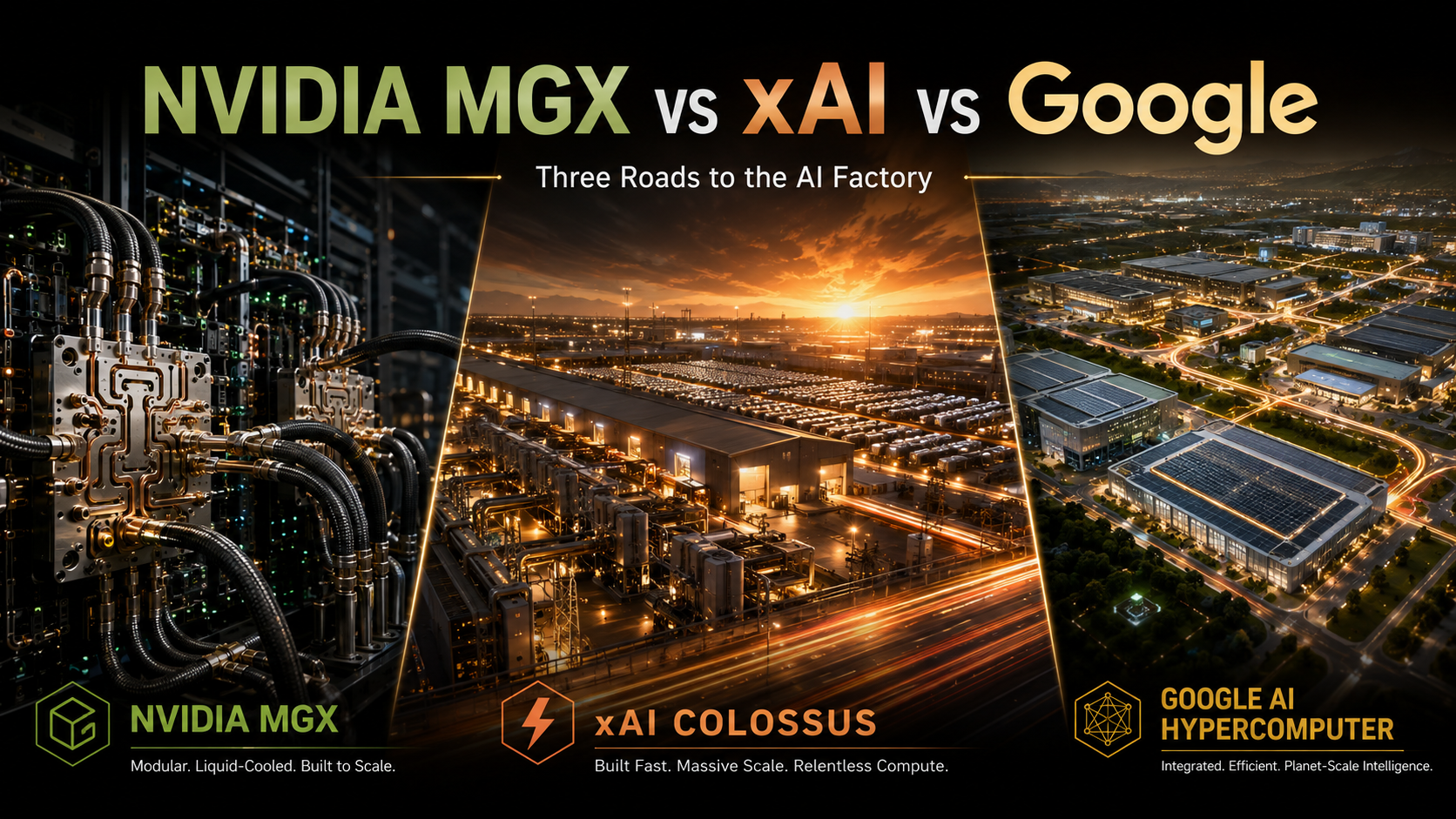
NVIDIA MGX, xAI Colossus and Google AI Hypercomputer compared as three different AI data center architectures.
Analysis

NVIDIA MGX vs xAI Colossus vs Google AI Hypercomputer: Three Roads to the AI Factory

NVIDIA, xAI and Google are building the AI data center in three very different ways. NVIDIA is creating the infrastructure standard, xAI is pushing deployment speed and massive GPU scale, while Google is vertically integrating TPU, networking and software. Their strategies reveal where the next AI infrastructure competition is heading.

Aug 17, 2026 · 6 min read
Korea AI data center industry ecosystem connecting semiconductors, AI servers, liquid cooling, power, HVAC and precision manufacturing companies.
Analysis

Korea AI Data Center Outlook 2026–2030

DATAAD analyzes 1,082 field records drawn from business-card and CRM databases to examine how Korea’s AI data-center ecosystem is evolving across liquid cooling, power, servers, HVAC, precision components and Physical AI.

Aug 15, 2026 · 14 min read
AI data center industrial stack from AI semiconductors and servers to liquid cooling, HVAC systems, power infrastructure and nuclear energy.
Insight

AI Data Centers Explained: From Chips to Servers, Cooling, HVAC and Nuclear Power

AI may look like a software revolution, but every AI service depends on a physical industrial stack: AI chips, memory, servers, racks, liquid cooling, HVAC and reliable electricity. The companies building this stack across the U.S., Taiwan and Korea may become some of the most important industrial players of the AI era.

Aug 15, 2026 · 14 min read