
Korea is no longer only a buyer of AI data center cooling systems. It is beginning to become a manufacturing and integration base for them.
That shift became clearer in August 2026, when Samsung Electronics announced plans to establish a new FläktGroup HVAC production line at its Gwangju operations site in Korea.
Samsung plans to invest approximately KRW 240 billion in the facility, with production scheduled to begin in early 2028. Among the equipment expected to be manufactured are coolant distribution units, or CDUs — one of the most critical pieces of infrastructure in high-density direct liquid cooling.
The announcement matters beyond Samsung itself.
Until recently, much of the discussion around AI data center liquid cooling in Korea focused on technology developed overseas: NVIDIA-oriented rack architectures, global CDU manufacturers, imported quick disconnects, cold plates and specialized cooling equipment.
That market is now beginning to localize.
Why the CDU Is Becoming Strategic Infrastructure
A CDU sits between the facility cooling system and the technology cooling loop serving GPUs, CPUs and other high-density electronics.
A simplified direct liquid cooling architecture looks like this:
Facility Water → CDU → Manifold → Hose / Quick Disconnect → Cold Plate → Return
The CDU manages heat exchange, coolant circulation, filtration, temperature, pressure and monitoring while separating the facility water loop from the cleaner secondary loop connected to expensive computing equipment.
As rack power density rises, this role becomes increasingly important.
A system designed around a few tens of kilowatts is fundamentally different from an AI cluster containing racks at 100 kW, 200 kW or more. As the number and density of those racks increase, CDU architecture moves rapidly from rack-mounted equipment toward several-hundred-kilowatt and eventually multi-megawatt systems.
Korea Is Developing Several Layers of the CDU Market
The emerging Korean market should not be viewed as a competition between identical CDU manufacturers.
Instead, several different supplier models are beginning to overlap.
| Market Layer | Representative Players | Strategic Position |
|---|---|---|
| Korean HVAC / Industrial Platforms | Samsung / FläktGroup, LG Electronics | Integration of CDU with broader facility cooling and HVAC infrastructure |
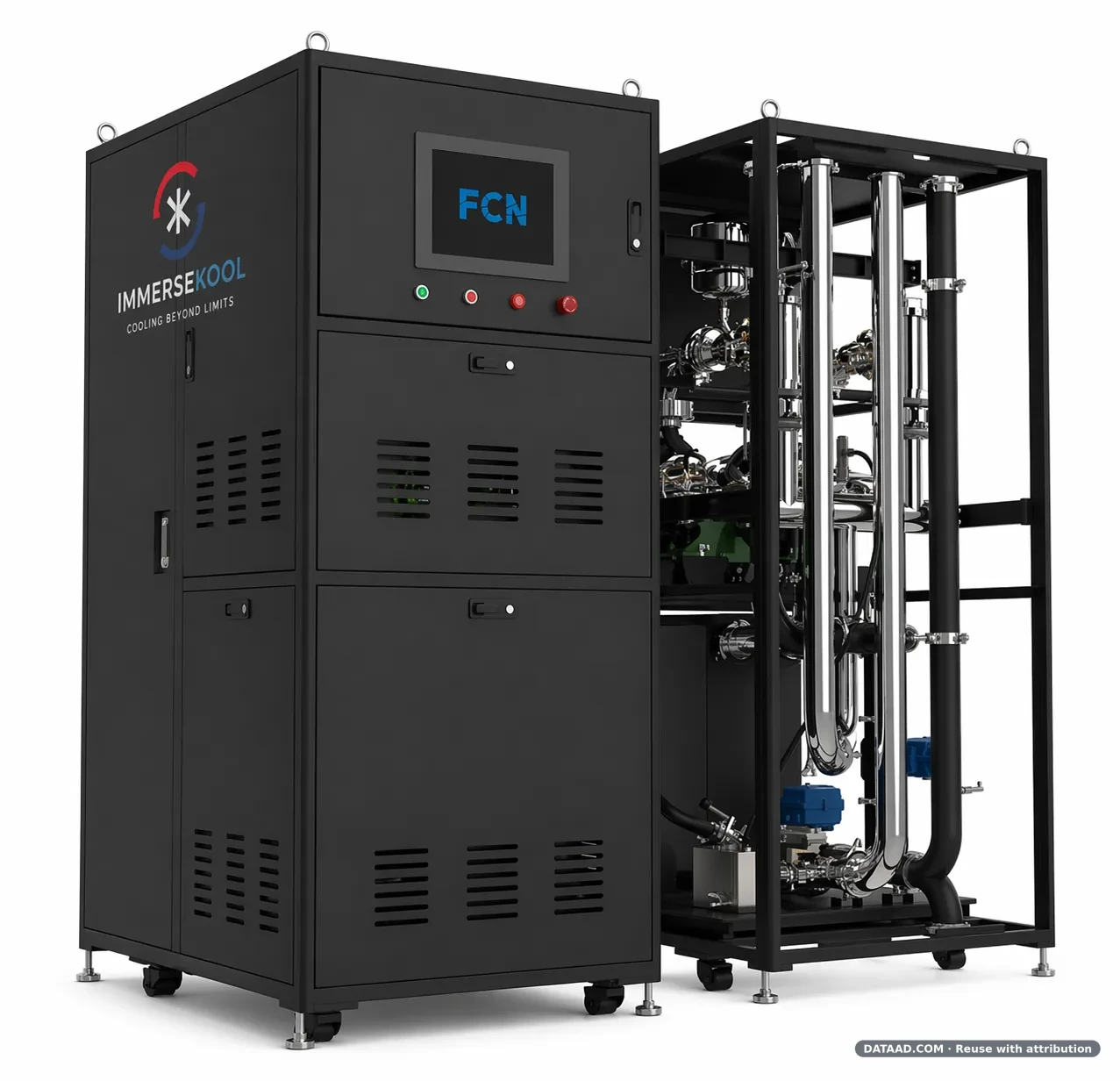
| Korea-Based Liquid Cooling Integration | FCN / ImmerseKool and other local engineering suppliers | Rack, manifold, hose, QD, CDU and project-level integration |
| Global AI Infrastructure Suppliers | Schneider Electric / Motivair, Vertiv, Delta, Rittal, CoolIT, nVent and others | Global reference platforms, high-capacity systems and hyperscale infrastructure |
This distinction will become increasingly important.
Some suppliers approach liquid cooling from the HVAC side. Others come from rack infrastructure, power systems or direct liquid cooling engineering. Still others specialize in integrating components into complete solutions for local customers.
Samsung and FläktGroup Add a New Dimension
Samsung’s Gwangju investment is significant because FläktGroup is not being positioned simply as a standalone CDU supplier.
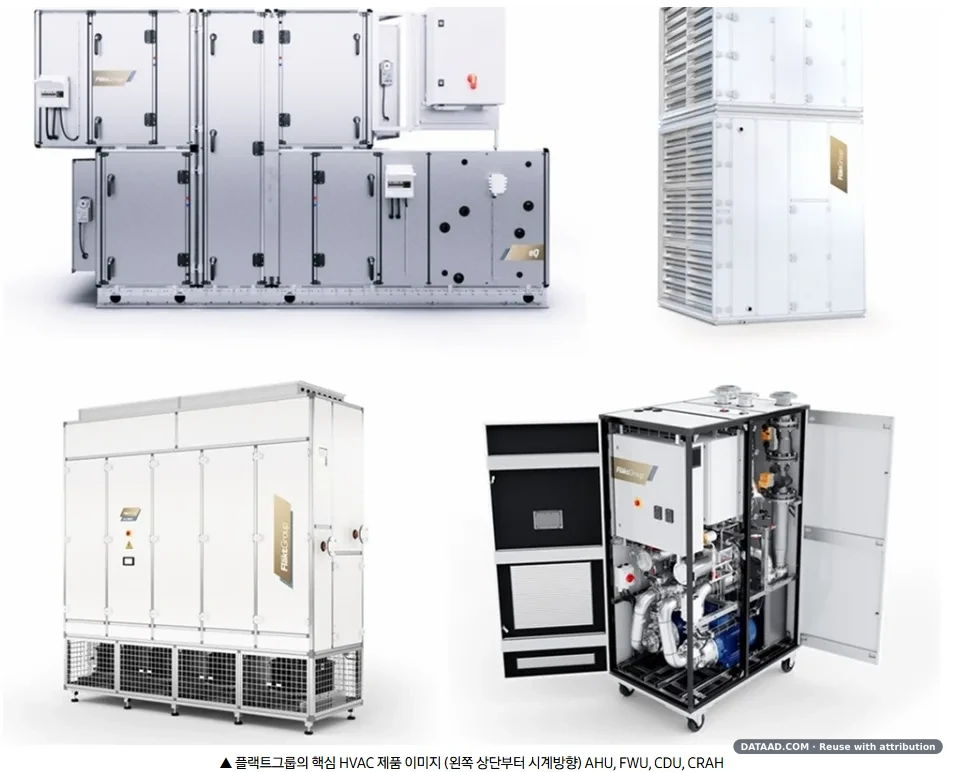
The broader portfolio includes air-handling and data center thermal equipment such as AHUs, FWUs, CDUs and CRAHs. That means Samsung can potentially approach future AI infrastructure from the building cooling layer as well as the liquid loop.
The competitive question is therefore becoming larger than “Who makes the CDU?”
It is increasingly:
Who can connect facility HVAC, heat rejection, CDU control and the IT liquid loop into one reliable thermal architecture?
Samsung Electronics’ Gwangju Campus 3, where a new FläktGroup HVAC production line is planned. Source: Samsung Electronics Newsroom.