

An Asian Industry Perspective on Integrated AI Infrastructure
AI’s next phase depends on how quickly the industry can deliver power, dense facilities, cooling, optical connectivity and reliable supply chains. Asia has many of these capabilities; its challenge is to integrate them into dependable AI infrastructure.

Executive Summary
AI deployment is increasingly constrained by grid connections, heat removal, network bandwidth, construction capacity and operating discipline. In its 2025 Energy and AI report, the International Energy Agency projected global data center electricity consumption of about 945 TWh in 2030. This base-case estimate is more than twice the 2024 level. Data centers can be built faster than the energy infrastructure supporting them.
This timing mismatch makes the complete system, from grid connection to useful AI output, the relevant investment unit. Accelerators delivered before power, cooling and networking are ready become stranded capital. Projects must align computing, facilities and operations from the start.
Six Infrastructure Decisions
| System Domain | Primary Constraint | Design Response |
|---|---|---|
| Power | Connection lead time and local grid congestion | Treat energy supply, transmission, substations and workload flexibility as one plan |
| Facility | Rapid increase in rack density | Use modular, repeatable blocks with power and cooling capacity reserved for the next rack generation |
| Cooling | Heat flux beyond practical air cooling | Select direct liquid, immersion or hybrid systems by workload, service model and fluid risk |
| Network | Bandwidth, power and distance limits | Co-design copper and optical links across scale-up and scale-out domains |
| Region | Different strengths and resource constraints | Assign manufacturing, integration, testbed and campus roles across Asian markets |
| Supply Chain | Long-lead components and fragmented accountability | Qualify interoperable designs and manage capacity through multi-party programs |
Power Availability and Grid Constraints
Power is the first gating item in many AI data center schedules. Large campuses concentrate demanding, rapidly growing loads at specific grid nodes. Adequate national generation does not guarantee usable local capacity when substations, transmission lines or interconnection queues constrain delivery.
Projects need a staged energy portfolio anchored in firm utility supply, with renewables, storage, on-site generation and longer-term low-carbon sources where appropriate. Training workloads can sometimes shift across time or geography; latency-sensitive inference is less flexible. Site selection, software and power contracts should reflect these differences.
Higher-voltage distribution can reduce losses, copper use and space requirements, but changes electrical protection, connectors and service procedures. Power architecture must therefore be designed alongside the computing platform and cooling system.
Practical priority: Define firm, usable power capacity and its delivery date for each project phase.
High-Density AI Data Center Design and Deployment
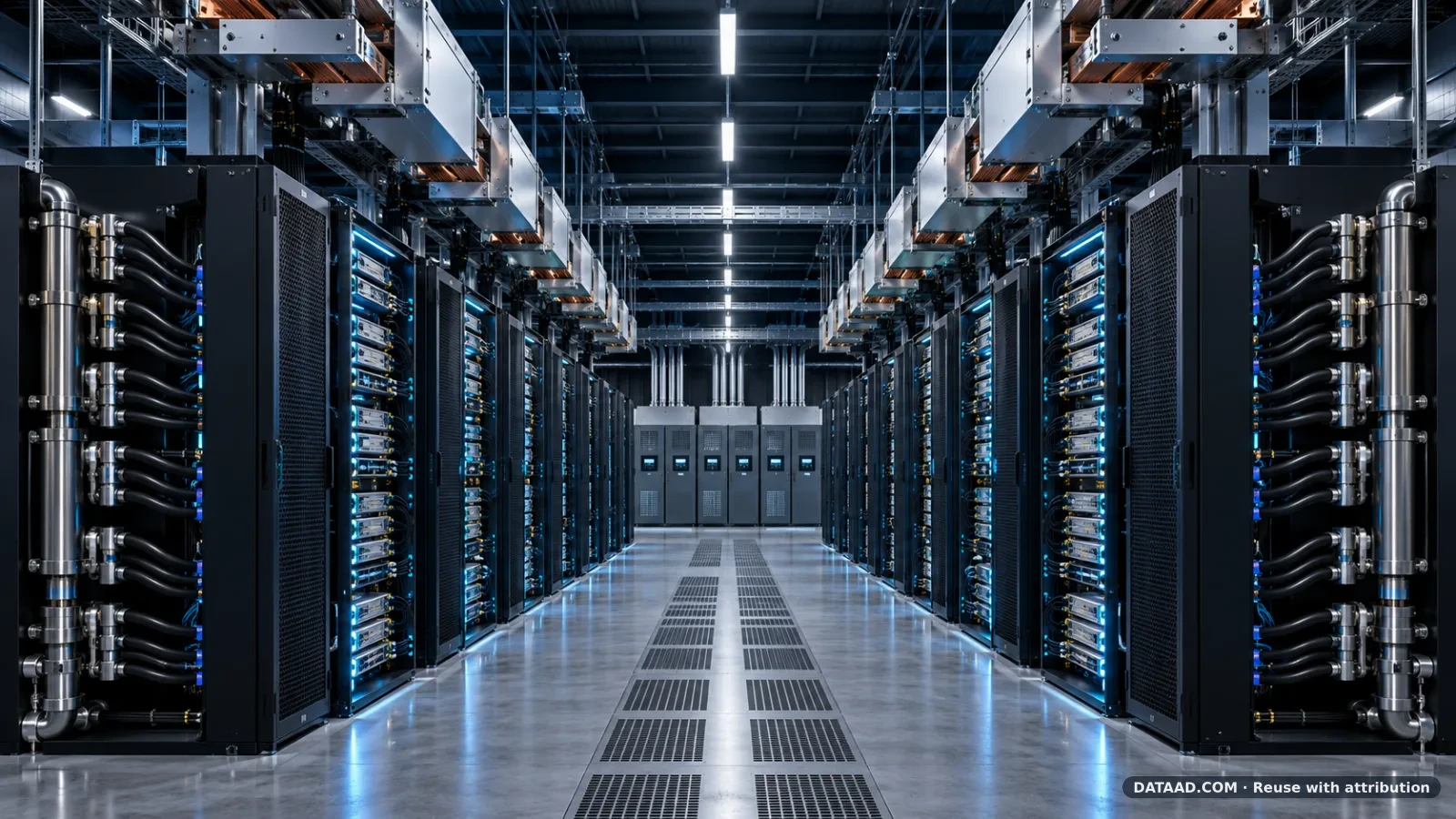
Facilities should be designed from the rack outward. Systems requiring around 100 kW or more of cooling per rack affect floor loading, busways, piping, cable routes, service access and failure domains. Conventional planning based on floor area alone is insufficient.
Repeatable modules can accelerate deployment. Each should combine racks, power distribution, coolant distribution, network topology, controls, fire protection and service clearances. Factory testing and standardized interfaces expose incompatibilities early and let validated designs be reproduced across sites.
Commissioning must test system interactions under representative loads, including utility loss, uninterruptible power supply (UPS) and generator transfers, pump failover, coolant interruptions, network degradation, alarm response and emergency shutdown.
Operational readiness also requires trained technicians, spare parts, contamination control and clear ownership between IT and facilities teams.
Practical priority: Freeze mechanical, electrical and control interfaces before selecting individual vendors.
Direct Liquid and Immersion Cooling Technologies
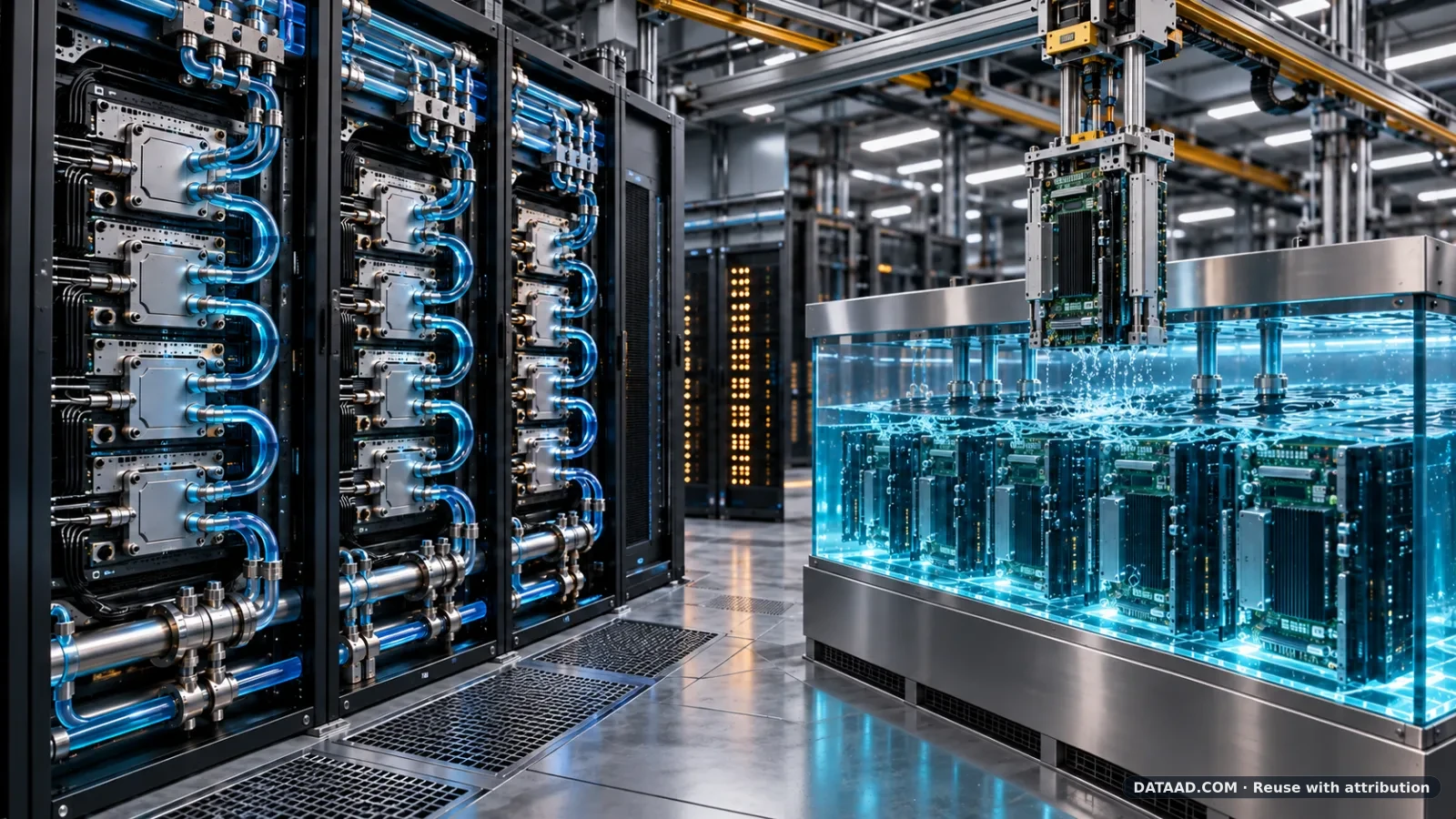
Liquid cooling is becoming essential for the densest accelerator systems. Selection must consider chip heat flux, the share of heat captured by liquid, fluid chemistry, facility loops, leak detection, materials compatibility, maintenance and warranties.
Direct-to-chip cooling is the near-term default for many rack-scale AI platforms. Cold plates remove processor heat while retaining familiar service practices, although memory and power components may still need air or additional liquid paths. Standardized manifolds, quick disconnects, coolant specifications and monitoring support deployment across vendors.
Immersion can capture much of a server’s heat and reduce fan power, but changes equipment design and maintenance. Qualification must address dielectric-fluid stability, component compatibility, filtration, fire and environmental requirements, and vapor management where relevant.
An overhead hoist transport system or suitable lifting equipment can move heavy modules between tanks and service areas. Single-phase and two-phase systems require separate evaluation because their fluids and operating behavior differ.
Choose by lifecycle cost and operating capability. Direct liquid cooling offers familiar maintenance and broad platform support; immersion may suit specialized footprints or demanding environments. Pilots should measure thermal performance, pumping energy, fluid condition, reliability, service time and total cost.
Practical priority: Qualify systems jointly with server, cooling, fluid, facility and insurance partners before scaling.
Optical Interconnects and Next-Generation Connectivity
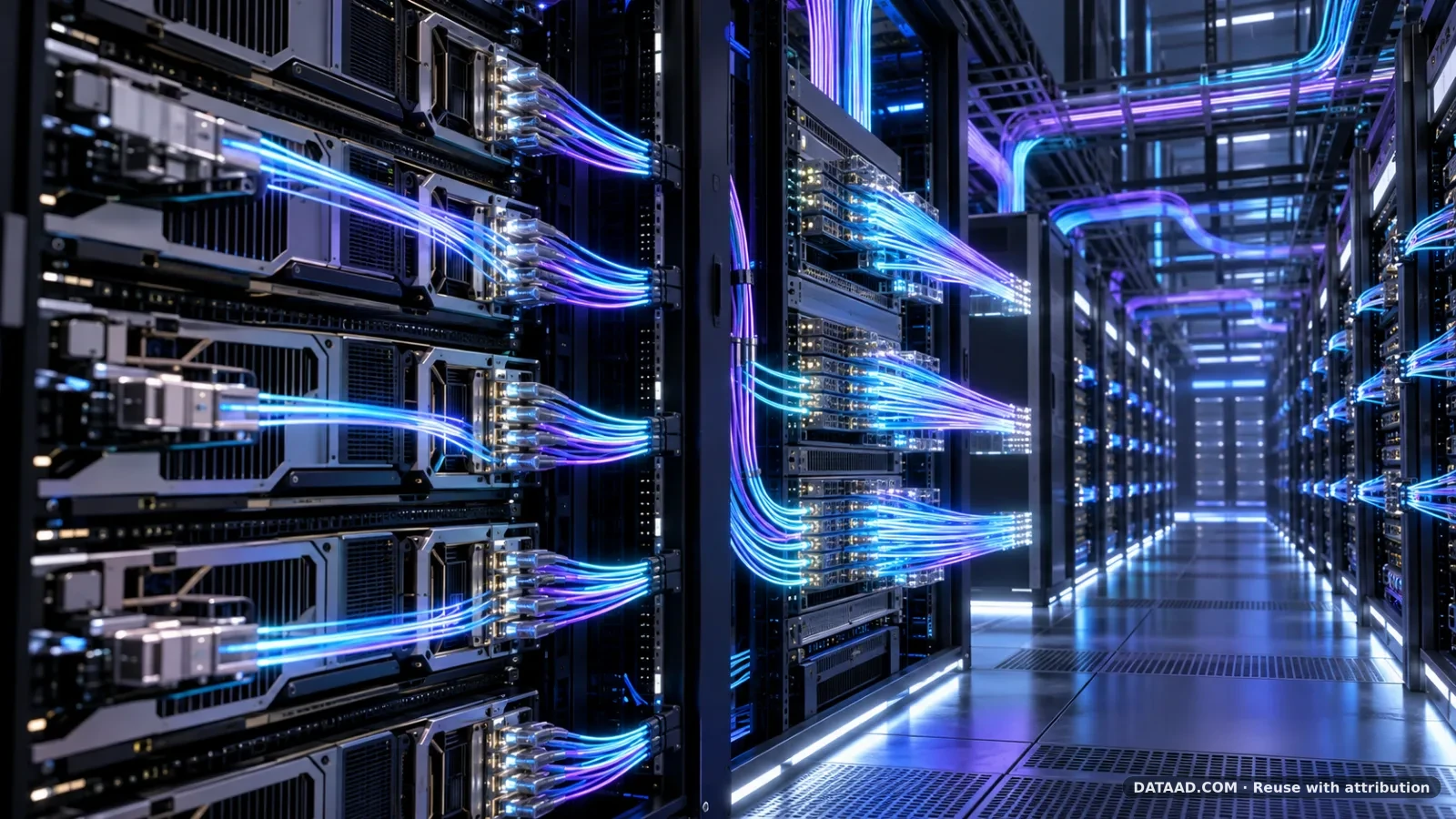
AI cluster performance depends on accelerators exchanging data at high bandwidth and predictable latency. Network design affects utilization and returns on power and capital. Connectivity spans short electrical links, scale-up connections between accelerators, scale-out fabrics between racks, storage networks and campus links.
Copper remains economical over short distances. Optical links become necessary as bandwidth, distance and connection density increase. The objective is to minimize energy and latency while meeting each link’s service requirements.
Pluggable optics enable field replacement. Co-packaged optics place optical engines closer to switch or compute silicon, potentially improving bandwidth density and energy efficiency. Adoption depends on thermal design, manufacturing yield, packaging, fiber management, serviceability and proven reliability.
Topology, optics, cable routes, switch cooling, congestion control and monitoring should be designed with rack placement and workloads. Open standards, interoperability testing and regional spares are as important as link speed.
Practical priority: Measure useful AI throughput per megawatt across the complete cluster.
Roles of Taiwan, Korea and Southeast Asia
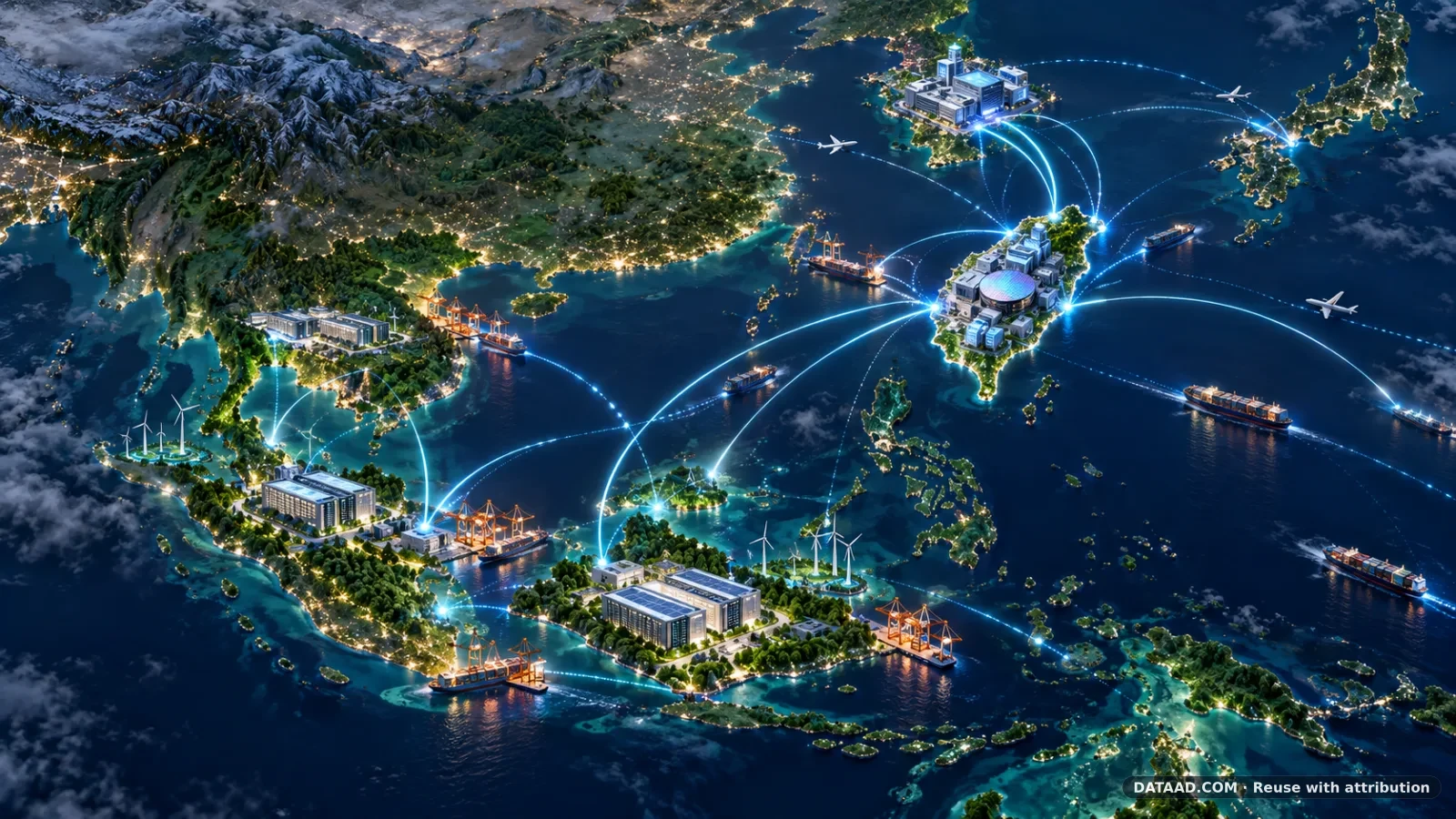
Asia’s opportunity lies in complementary strengths. Assigning roles by technological depth, manufacturing scale, resources, market access and operating experience can reduce duplication and accelerate deployment. Regional specialization must also preserve supply-chain resilience.
| Region | Core Strengths | Best Near-Term Role | Primary Constraint |
|---|---|---|---|
| Taiwan | Logic, packaging, servers, networking, power and thermal manufacturing | System industrialization, integration and export | Large-site power availability and domestic hyperscale demand |
| Korea | HBM, memory, storage, semiconductors, industrial systems and telecom | Memory-centric architectures, advanced testbeds and operations | Power concentration, permitting and conversion from components to solutions |
| Southeast Asia | Land, expanding digital markets, subsea connectivity and new campus development | Large-scale regional deployment and sustainable operations | Grid readiness, water, skills and uneven regulatory execution |
Regional Collaboration Across the Supply Chain
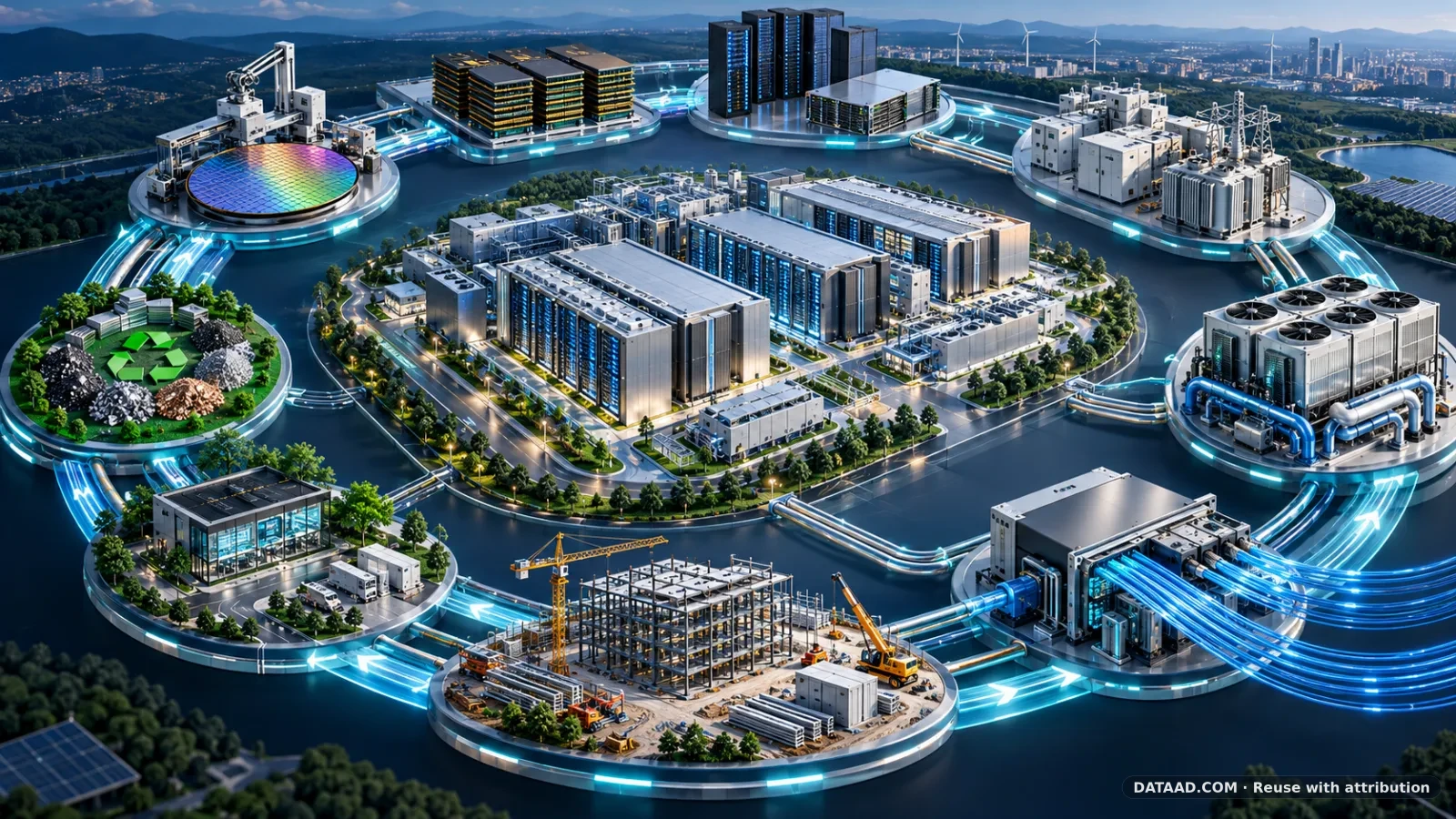
Regional collaboration should reduce schedule risk, interface failures and lifecycle cost. It requires reference architectures, defined interfaces, shared qualification methods, named project sites and clear agreements on intellectual property, warranties, capacity reservations and support.
Taiwan’s server, power and thermal suppliers, Korea’s semiconductor and industrial ecosystem, and Southeast Asia’s developers and utilities can jointly qualify infrastructure blocks. Common requirements should cover rack mechanics, power input, coolant quality, cabling, controls and commissioning, with validation for local conditions.
Utilities, energy developers, engineering, procurement and construction (EPC) contractors, integrators, equipment suppliers and operators should work together from concept design. One party must own end-to-end system performance so failures at supplier interfaces have clear accountability.
Regional testbeds can assess direct liquid and immersion cooling, alternative fluids, higher-voltage distribution, optical fabrics, heat reuse and workload flexibility. Results should document service time, degradation, energy and water use, and training requirements to support customer, lender and insurer acceptance.
Dual sourcing improves resilience only when alternatives are interoperable. Transformers, switchgear, coolant distribution units, pumps, connectors, optics and controls need capacity plans and regional spares. Suppliers need stable specifications and credible demand forecasts.
Conclusion
AI infrastructure can scale fast enough when every layer is planned together. Generation, grids, power conversion, buildings, cooling, networks, controls, people and supply chains must be ready; the slowest layer determines when useful computing becomes available.
Taiwan can industrialize and integrate advanced computing platforms; Korea can combine memory and semiconductor capabilities with facility engineering; and Southeast Asia can host regional deployment and sustainable operations. Their advantage depends on shared architectures, qualification and accountable delivery.
Success should be measured by how reliably a complete AI data center ecosystem converts megawatts into useful AI output.